Exploring Bar Version Illustration Techniques: A Comprehensive Overview to Envisioning Math Concepts
Bar model attracting techniques function as a beneficial resource for both teachers and pupils in visualizing mathematical principles. These designs streamline intricate mathematical relationships, aiding in the understanding of addition, department, subtraction, and multiplication. This guide outlines efficient methods for implementing bar versions, fostering active interaction and real-world connections. As visitors check out the practical applications and teaching suggestions, they will reveal how these methods can transform their approach to maths.
Comprehending the Essentials of Bar Version Drawing
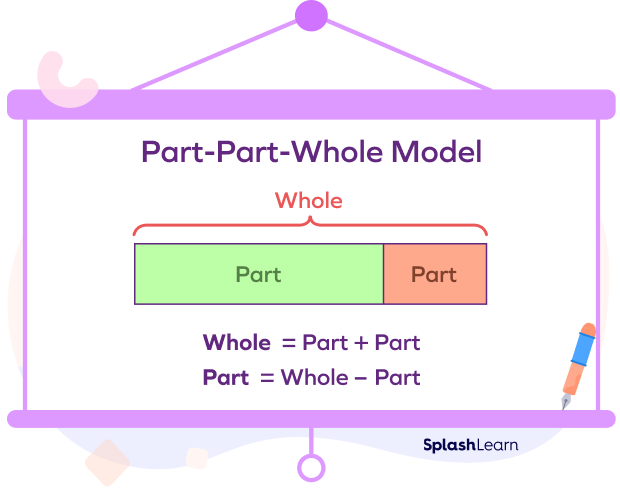
Bar version drawing acts as a powerful visual tool in maths, assisting in the understanding of mathematical relationships and analytical techniques. This technique includes representing numbers and their connections via rectangle-shaped bars, making it less complicated to imagine procedures such as enhancement, subtraction, multiplication, and division. Each bar's length represents a specific value, allowing learners to contrast amounts and understand percentages plainly.
To develop a bar model, one starts by identifying the problem's crucial elements, usually damaging it down into parts that can be visually stood for. For example, in a basic addition problem, 2 bars can be attracted, with their sizes standing for the addends. The combined length illustrates the amount. In enhancement, bar models can be adjusted for much more complicated issues, including ratios and fractions, by changing benches accordingly. Grasping these fundamentals lays a strong structure for reliable problem-solving and much deeper mathematical understanding.
Advantages of Making Use Of Bar Versions in Mathematics
Making use of bar designs in maths offers many benefits that improve learning and comprehension. These graphes aid pupils in realizing complex principles by damaging them down right into workable parts. Bar designs supply a clear structure for illustrating relationships in between numbers, making abstract ideas more concrete. They advertise a deeper understanding of mathematical operations and promote analytic by allowing learners to picture the data they are dealing with.
Bar designs support the advancement of important believing skills, as pupils should analyze and translate the visual details to draw final thoughts. This approach urges active interaction with the material, strengthening retention and proficiency of mathematical principles. By fostering a solid foundation in aesthetic literacy, bar designs equip students to come close to different mathematical difficulties with confidence. On the whole, the integration of bar designs right into maths education and learning shows advantageous in growing both understanding and analytical capacities amongst trainees.
Using Bar Models to Addition and Reduction
Bar models work as an efficient device for visually representing enhancement and reduction issues. By showing the connection in between numbers, they enhance understanding and promote analytical. Additionally, real-life applications of these versions can aid students grasp mathematical ideas in functional contexts.
Representing Enhancement Visually
Aesthetic help can considerably boost their understanding of these operations when students encounter addition and reduction issues. Bar designs offer as effective tools for standing for addition. By splitting a rectangular shape right into segments that represent the numbers involved, students can imagine the connection between the quantities. If a trainee requires to add 3 and 5, they can develop a bar separated right into two sections: one area representing 3 and the various other representing 5. This clear depiction not only simplifies the enhancement procedure but likewise enhances the idea of combining amounts. As pupils adjust these aesthetic aids, they develop a much deeper comprehension of addition, resulting in boosted analytic abilities and higher self-confidence in their mathematical capacities.
Subtraction With Bar Models
Although reduction is often viewed as a much more intricate operation than addition, bar designs can effectively clarify this procedure for pupils. By visually standing for the amounts included, students can better understand exactly how numbers associate with each other. In a bar design for subtraction, one bar represents the total amount, while another shows the amount being subtracted. This visual difference aids students realize the principle of "removing." If a bar reveals 10 units, and another bar representing 4 systems is removed, students can quickly see that 6 systems remain. This strategy not only cultivates understanding of subtraction but likewise help in creating problem-solving abilities, allowing trainees to imagine their mathematical thinking and improve their general understanding of mathematical concepts.
Real-Life Application Examples
Understanding subtraction with bar models lays a foundation for applying these techniques in real-life situations. In numerous contexts, such as budgeting or purchasing, people can imagine how much money continues to be after expenditures. For circumstances, if a person has $50 and invests $20, a bar design can represent the overall quantity and the spent section, highlighting that $30 is left. Furthermore, parents can utilize bar designs to assist youngsters recognize the number of more things need to be added to complete a set, such as having 3 apples and needing 5. This visual depiction simplifies complex problems, facilitating understanding and retention. Eventually, bar designs offer as efficient tools in daily decision-making, enhancing mathematical understanding in functional scenarios.
Visualizing Reproduction and Division With Bar Models
In checking out the application of bar versions for multiplication and department, it is vital to realize their fundamental ideas. Building reproduction models enables students to visualize partnerships in between numbers, while reliable division approaches can be shown with these aesthetic help. This technique enhances comprehension and analytical skills in mathematics.
Comprehending Bar Designs
Bar models offer as a powerful visual device for showing the principles of multiplication and division. They enable learners to stand for mathematical relationships in an organized style, facilitating a much deeper understanding of these operations. In multiplication, bar versions display teams of equal size, permitting individuals to visualize the overall quantity when integrating these groups. On the other hand, in department, bar versions assist show exactly how a total amount is split into smaller, equivalent parts, clearing up the concept of partitioning. By using these aesthetic aids, students can grasp the underlying concepts of multiplication and department much more successfully. This technique not only improves comprehension yet likewise supports analytic skills, making bar versions an invaluable asset in mathematical education.
Creating Reproduction Versions
Building reproduction designs using bar representations uses a clear approach for picturing the procedure of multiplication. These models make it possible for students to represent official website reproduction as groups of equivalent parts, making abstract concepts more concrete. For instance, to illustrate (3 times 4), a student can draw one bar split into 3 equivalent sectors, each representing four systems. Additionally, developing a 2nd bar with the same size enhances the understanding of repeated addition, as each section matches to one group. This graph not just aids in realizing multiplication but also boosts analytical abilities. By using bar versions, pupils can better comprehend partnerships in between numbers and develop a robust foundation for extra complex mathematical principles, leading to boosted self-confidence in their capacities.
Picturing Department Strategies
Fixing Word Problems Utilizing Bar Version Techniques
In an issue entailing addition and subtraction, trainees can draw different bars for each quantity and after that manipulate them to find the solution. This process not only clears up the trouble but likewise fosters a deeper theoretical understanding. Furthermore, bar models can be adjusted for numerous sorts of word issues, making them flexible throughout different mathematical subjects. Inevitably, making use of bar versions can substantially enhance students' problem-solving abilities by providing a clear visual pathway to come to the proper response.
Integrating Bar Models in Various Mathematics Topics
Bar models can be flawlessly integrated right into different mathematics subjects, improving students' understanding of concepts past fundamental arithmetic. In algebra, these aesthetic tools help in representing formulas and inequalities, making it possible for students to imagine partnerships in between variables. When tackling geometry, bar designs can highlight the properties of forms and spatial reasoning, aiding trainees comprehend principles like area and perimeter effectively. In statistics, bar versions help with the interpretation of information sets, permitting trainees to contrast amounts and identify fads aesthetically. Additionally, incorporating bar designs within measurement topics aids in comprehending units and conversions by giving a concrete representation of amounts. By utilizing bar versions across different mathematical areas, teachers can foster a much deeper comprehension of intricate concepts, thus improving analytic abilities and advertising crucial reasoning (bar model drawing techniques). This versatility demonstrates the energy of bar models as a fundamental tool for trainees in their mathematical journey
Tips for Mentor Bar Versions Efficiently
Integrating bar versions into teaching methods requires thoughtful strategies to maximize their performance. Educators ought to start by presenting bar designs with simple, relatable examples that students can easily understand. This helps to develop confidence and knowledge with the principle. Progressively enhancing the intricacy of issues permits students to use their abilities considerably. In addition, instructors need to urge pupils to produce their own bar versions, promoting energetic interaction and ownership of their knowing.
Including collective tasks can likewise improve understanding, as pupils talk about and fix issues in groups. Continuous feedback is crucial; teachers ought to provide positive commentary on pupils' bar model depictions to direct improvement. Linking bar versions to real-life circumstances strengthens their relevance, aiding students see the practical applications of their mathematical abilities. By executing these techniques, teachers can properly harness the power of bar designs in Website their maths guideline.
Often Asked Questions
Can Prevent Versions Be Used in Various Other Topics Besides Math?
Bar versions can undoubtedly be utilized in different subjects past mathematics. They efficiently show principles in scientific research, social research studies, and language arts, aiding to aesthetically represent relationships, procedures, and concepts for improved understanding throughout disciplines.
What Age Is Finest Matched for Understanding Bar Models?
Bar designs are best matched for children ages 7 to 12, as they create concrete thinking skills during this duration (bar model drawing techniques). At this age, pupils can properly comprehend abstract principles via graph and analytical methods
Are There Digital Tools for Creating Bar Designs?
Just How Can I Examine Trainee Comprehending of Bar Versions?
Examining trainee understanding of bar versions can include tests, empirical assessments, and seminar. Educators could likewise examine students' finished designs and their capacity to explain their reasoning, making certain a comprehensive evaluation of comprehension.
What Are Common Mistakes When Using Bar Designs?
Typical errors when making use of bar versions consist of misrepresenting amounts, failing to properly identify bars, confusing addition and reduction, neglecting to make use of linked here consistent ranges, and neglecting the importance of clear aesthetic separation in between various elements.
In enhancement, bar designs can be adapted for much more intricate troubles, consisting of ratios and fractions, by changing the bars as necessary. Reduction is commonly perceived as a much more complex operation than enhancement, bar versions can properly clarify this process for trainees. In a bar version for reduction, one bar represents the total amount, while an additional indicates the amount being subtracted. If a bar shows 10 units, and an additional bar representing 4 units is removed, pupils can conveniently see that 6 systems continue to be. When splitting an overall right into equivalent groups, pupils can draw a long bar to represent the whole and after that sector it into smaller bars that indicate each group.
Comments on “Explore the benefits of bar model drawing techniques for primary students”